Modern gas fire pits, fire tables and custom built-in fire features — chosen with you, displayed lit in our Huntington Beach design center, and delivered across Southern California.
We are an outdoor living design center in Huntington Beach. Homeowners come to us to see fire features in person, get straight help choosing between them, and leave knowing exactly what they are getting — the height, the fuel, the burner, how it lights, and how much space it needs around it.
Fire features, stone and tile, outdoor kitchens and shade structures sit under one roof in Huntington Beach — so the patio can be planned together rather than ordered piece by piece from separate suppliers.
Showroom displays are available for viewing, so you can judge what a spec sheet cannot tell you: how tall a fire table really sits, what fire glass looks like in daylight, and how a flame reads across a burner.
We start by asking how you use the space and where the seating goes, then work outward. That often means steering you toward a smaller feature that suits the patio rather than the largest burner on the shelf.
We work directly with established fire feature and surfacing manufacturers, so we can share current cut sheets, realistic lead times and clear answers on warranty support.
Some of the brands we work with





Most backyards have somewhere to sit. Far fewer have a reason to sit there after eight o'clock. A fire feature is what changes that — it gives the seating something to face, makes the space usable on a cool evening, and tends to become the part of the house people gravitate to.
That is a different job from a pool fire bowl. A fire bowl is architecture: it sits on the pool structure and is admired from across the water. A fire pit or fire table is furniture you gather around — the layout follows where the chairs go, not where the pool shell was poured. It is the difference between a feature you look at and one you entertain around.
Get the height right and the seating arranges itself. Get it wrong and you have a beautiful object nobody sits near.
A gas fire pit lights on demand and goes out the same way — no wood to store, no embers drifting toward a neighbor's roof, no ash the next morning. It is why most Southern California backyards end up on gas.
What varies is how the flame is presented: fire glass reads modern and low, lava rock reads warmer and more textured, and a linear trough suits a long seating run better than a round pit.
Underneath, the decisions are always the same four: how big the burner is, what it burns, how you light it, and how air gets to it. All four are far easier — and cheaper — to settle before anything is built.
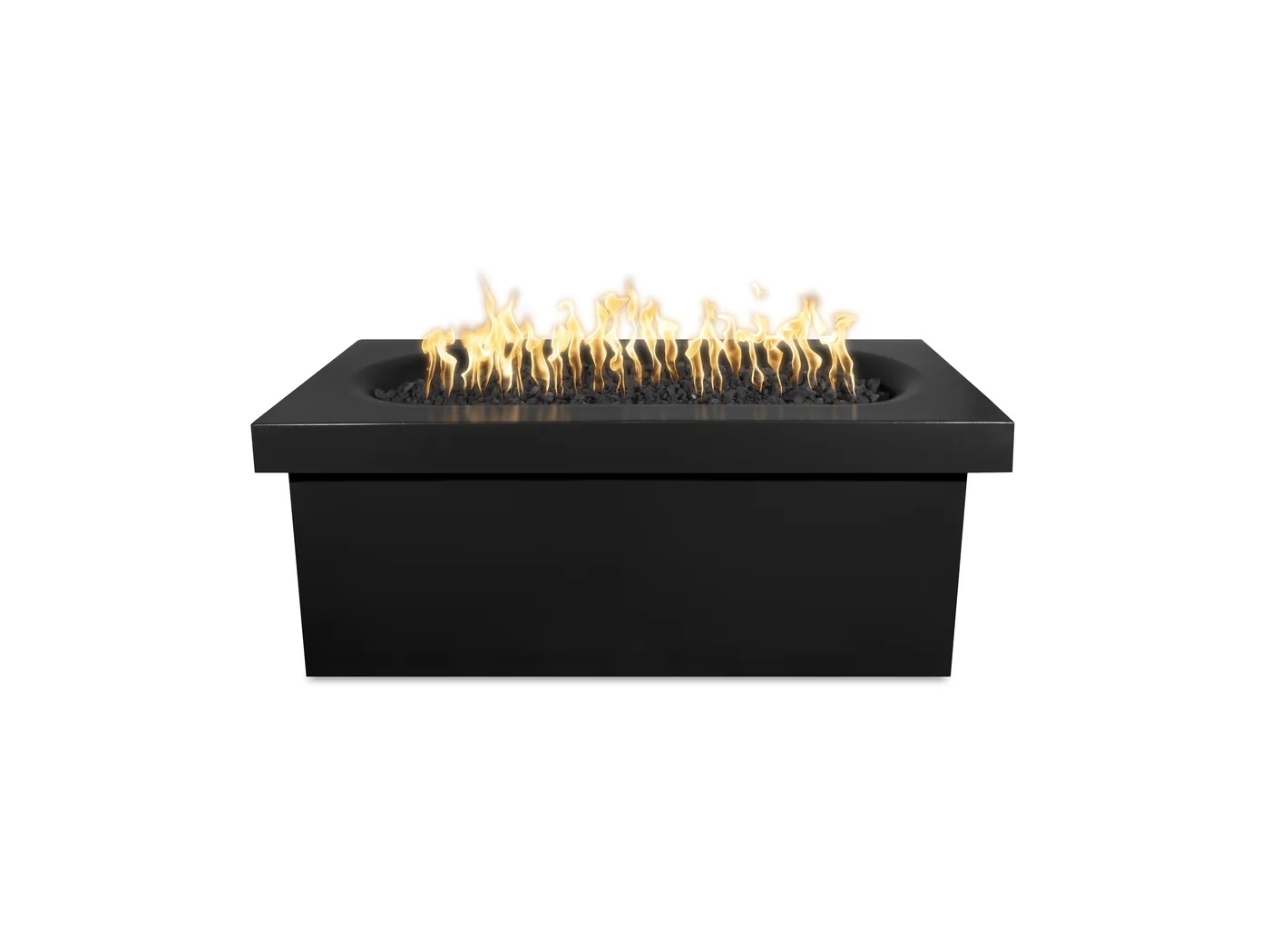
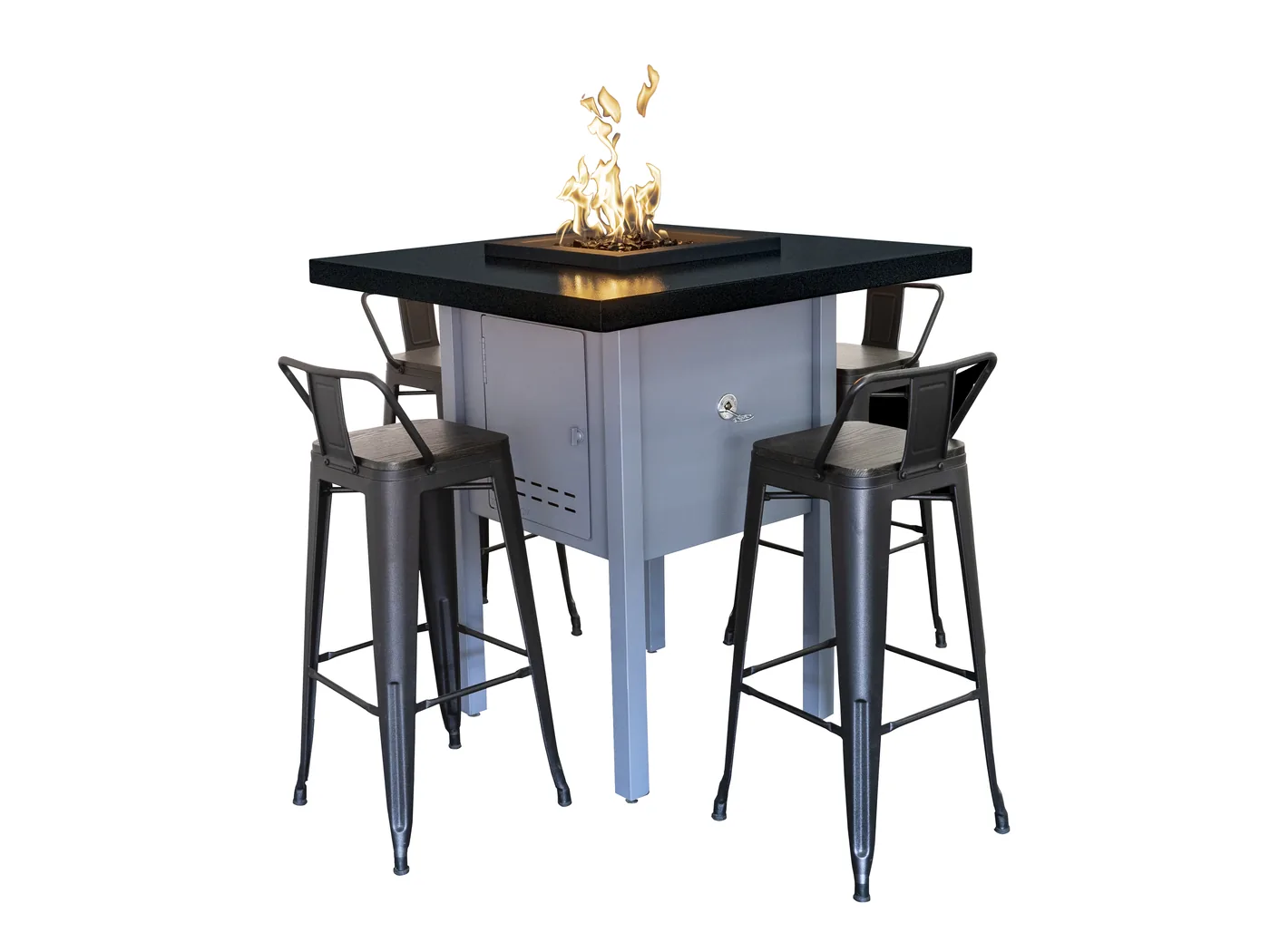
A fire table is a fire pit built at a working height, and that one change decides how the space gets used. At lounge height it anchors a set of deep-seating chairs. At dining height it becomes the table people eat at, with the flame running down the middle. At bar height it pairs with stools along the edge of a kitchen run or a balcony rail.
Because the top is a surface you actually set a glass on, the material matters more here than on a low pit. Porcelain shrugs off sun, spills and salt air, so it is the safe pick for a coastal or full-sun patio. GFRC — a lightweight concrete — gives you the poured-concrete look without the weight. Poured concrete is the most solid, best where the table will never move. Powder-coated metal is the lightest and comes in the most colors.
Modern fire pits for a clean-lined patio, a big backyard fire pit for entertaining, a built-in feature veneered into the hardscape — they all start the same way. A fire pit is a package, not a single item:
Those pieces have to suit one another, so we help you select them together rather than as a cart full of parts.
Round, square and linear gas pits with fire glass or lava rock beds, sized to the seating around them.
Shop Gas Fire Pits →Lounge, dining and bar-height tables with a flame down the center and a usable surface around it.
Browse Fire Tables →Fire features built into a seat wall, planter or kitchen run and veneered to match the hardscape.
Plan a Built-In →Move-in-ready pieces for patios, decks and entries — no enclosure to build, no trenching required.
See Fire Bowls →Long, low burners for a bench run or a wall — a line of flame instead of a single point.
View Linear Burners →Burner pans and rings, fire glass, lava rock, log sets and ignition kits matched to the enclosure.
Shop Burner Systems →The stone, tile and coping that wrap a built-in fire feature, selected alongside it rather than after.
Browse Stone & Tile →Tell us the size of the patio and how you'd like to use it. We'll come back with a size, a height and a layout that works with your furniture.
Get a Free Consultation →Start with the categories above, or browse the full collection online. You do not need to know what you want yet — a rough idea of where the seating goes, and whether the spot is open or under cover, is enough to begin.
Explore Products →Fill in the short form and tell us how you use the space. We come back — usually within one business day — with sizing, fuel options and a real number to plan against. No obligation, and no charge for the consultation. You can text or email photos of the patio any time after; they help, but they are not required to get started.
Request My Free Quote →Come to Huntington Beach and see your shortlist lit before you commit. We confirm the finish, settle the height, and hand over the paperwork your installer needs — the safe distances and the exact gas and electrical connection points — then deliver on your build schedule.
Plan Your Visit →Most people buy one fire feature in their life. You should be able to see it lit and understand what you are choosing before you spend anything.
The hard part is not buying a fire pit. It is working out which one suits the space you already have.
Selection, specification and delivery handled in one place, so you are not chasing three suppliers for one patio.
Five decisions shape how a fire feature looks, what it costs and how well it works for hosting. All five are cheaper to settle now than after the patio is poured — and none of them require you to know the jargon. Here is what each one actually means.
Start here. Height decides the furniture, and the furniture decides the size — so this one choice shapes everything after it.
Neither is better — they solve different problems and cost very differently.
This affects burner sizing and the specifications your installer works from, so it is worth settling early.
These three choices are what make one gas fire pit look modern and another look rustic.
The one people tend to discover too late. Products publish minimum distances, and those figures are best treated as the starting point for the layout.
Not sure where you land on any of these? That is what the free consultation is for — tell us about the space and we will walk you through all five in plain English. Get a free quote →
Height, and how you end up sitting around it. A fire pit sits low, at roughly coffee-table height, so lounge seating gathers around it and people lean in. A fire table is built at dining or bar height, so it doubles as a surface for glasses and plates and works with normal chairs or stools. The burner underneath is often identical — what changes is how the space around it gets used.
Usually yes for anything permanent, and usually no for anything portable. A freestanding fire table you unbox and connect a tank to generally needs no permit. A built-in fire feature does, and in particular any new natural gas line — the gas piping is normally what triggers it. Requirements vary by city and county across Southern California, so confirm with your local building department before work starts. We supply the manufacturer paperwork your contractor needs for the plans, including where the gas and electrical connections have to land.
Follow the safe distance printed in your product's manual — that figure is what actually governs, and it varies by model. As a rough guide, gas fire pits need far less room than wood, often a few feet from anything that can burn, while wood-burning pits are commonly kept ten to twenty-five feet from the house because of flying embers. There is a published distance for the seating too, and it is the number that quietly decides how far back the chairs sit. We check these against your patio dimensions before anything is ordered.
Natural gas suits a permanent, frequently used feature — nothing to refill and it never runs out mid-evening — but it needs a line run to the location. Propane goes anywhere no line reaches, and most freestanding fire tables are built to conceal a tank in the base. The decision affects burner sizing and the specifications your installer works from, so it is worth settling before the burner is ordered.
Yes, though ambience is the main event. A feature in the region of 50,000 BTU throws noticeable radiant warmth roughly eight to ten feet out, which is enough to make a patio comfortable on a cool Southern California evening. It warms the people around it rather than the whole yard, and wind and how open the space is make a real difference.
Often, yes. A built-in fire pit needs a stable base, a gas line run to it, and vents in the enclosure so gas can escape rather than collect inside. On existing hardscape that usually means trenching for the gas line and building the enclosure on top, which your contractor can confirm on site. Where trenching is not practical, a freestanding gas fire table with a concealed tank gets you a similar result with no excavation.
From the Huntington Beach showroom we supply and support fire pits, fire tables and built-in fire features throughout Orange County — for homeowners building one backyard and for contractors building many.
Building elsewhere in Orange County, or just over the line in Los Angeles, Riverside or San Diego county? Ask us — we ship and deliver beyond this list.
Flame height, the true color of fire glass and how a table feels at dining height are hard to judge from a product photo. Showroom displays are available for viewing at our Huntington Beach location, so you can compare finishes and heights in person and talk them through with our team.
Homeowners are most of who we see. Trade partners are who we see again next month — and the support is built for that.
One fire table on a deck or a full built-in fire feature in a new patio — tell us about the space and we will help you work out what it needs.
Tell us about your patio or seating area and our team will follow up with sizing, options and pricing. Photos help — text or email them any time after you send this.